
Multiscale/Fanned Fret Bass
Go Down Low
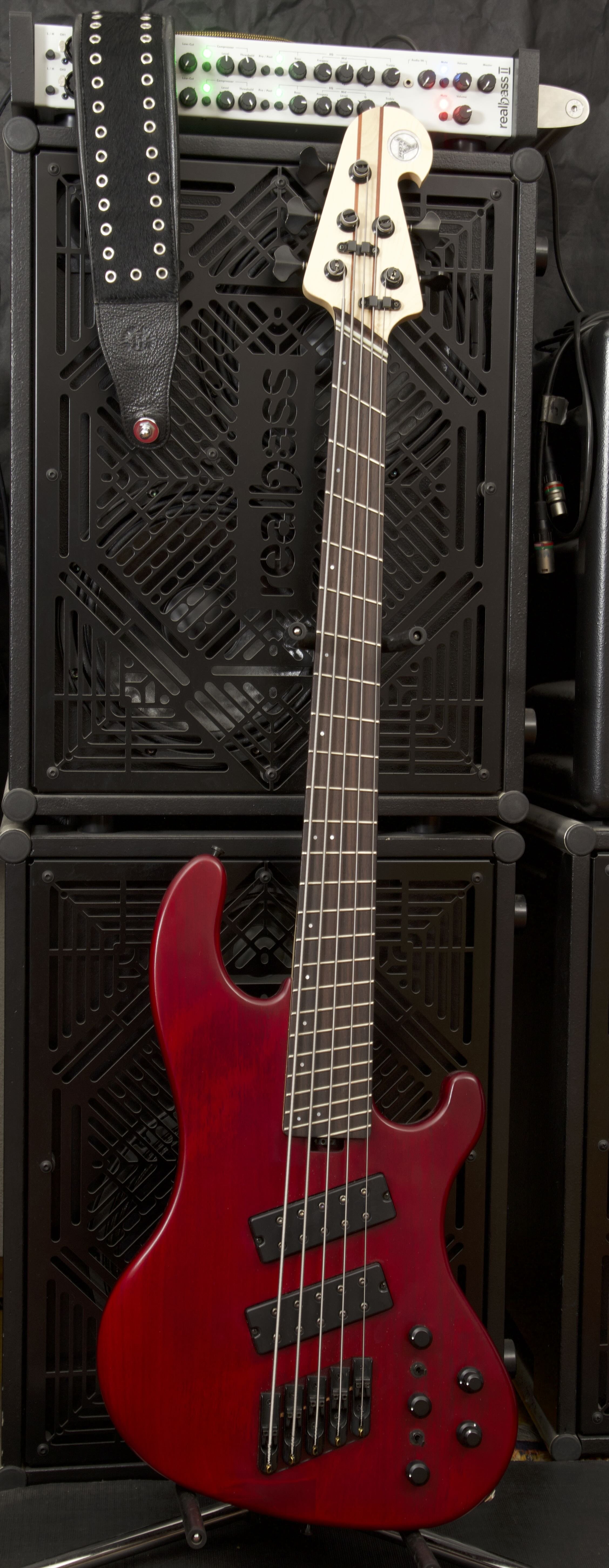
The idea behind a fanned-fret (multi-scale) bass is simple and logical. On a piano, low-pitched strings are longer than high-pitched ones. The same principle applies to bass guitars.
To achieve a full, round tone on the low strings and a tight, focused sound in the upper register, the low B string requires a longer scale length than the high G string.
Introducing the new Hot Wire Inlaw 525 FanFret model.
On this bass, the low B features an XXL scale, with the remaining strings gradually decreasing in length, ending with a medium-scale G string. The result is a powerful low end with improved clarity and definition in the higher register.
Because of the multi-scale layout, the frets are slightly angled. This requires a small adjustment in fretting technique, but most players adapt very quickly.
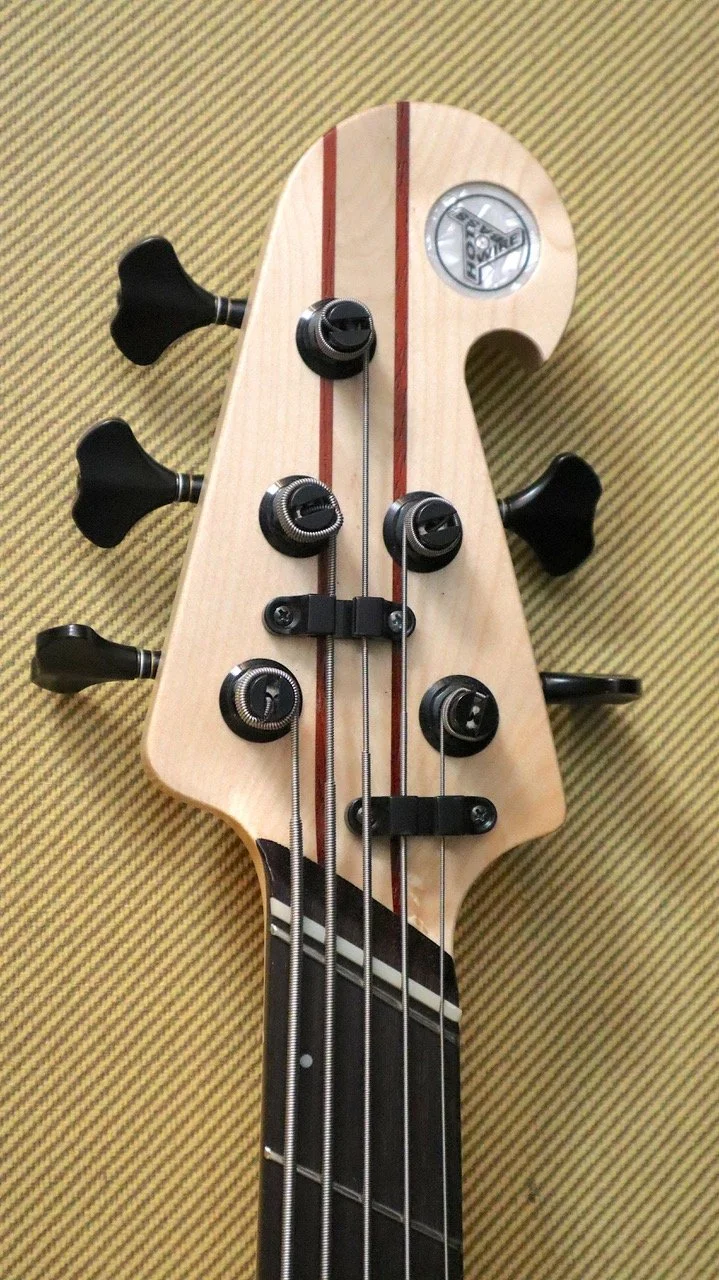
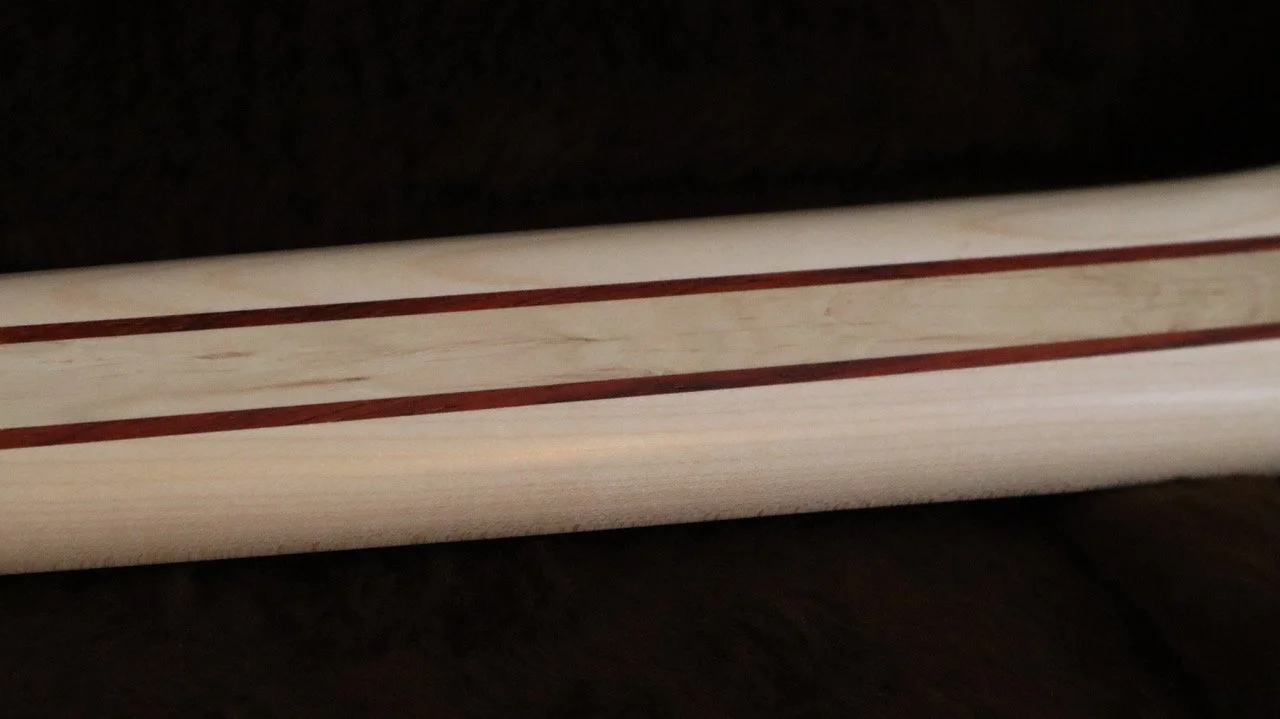
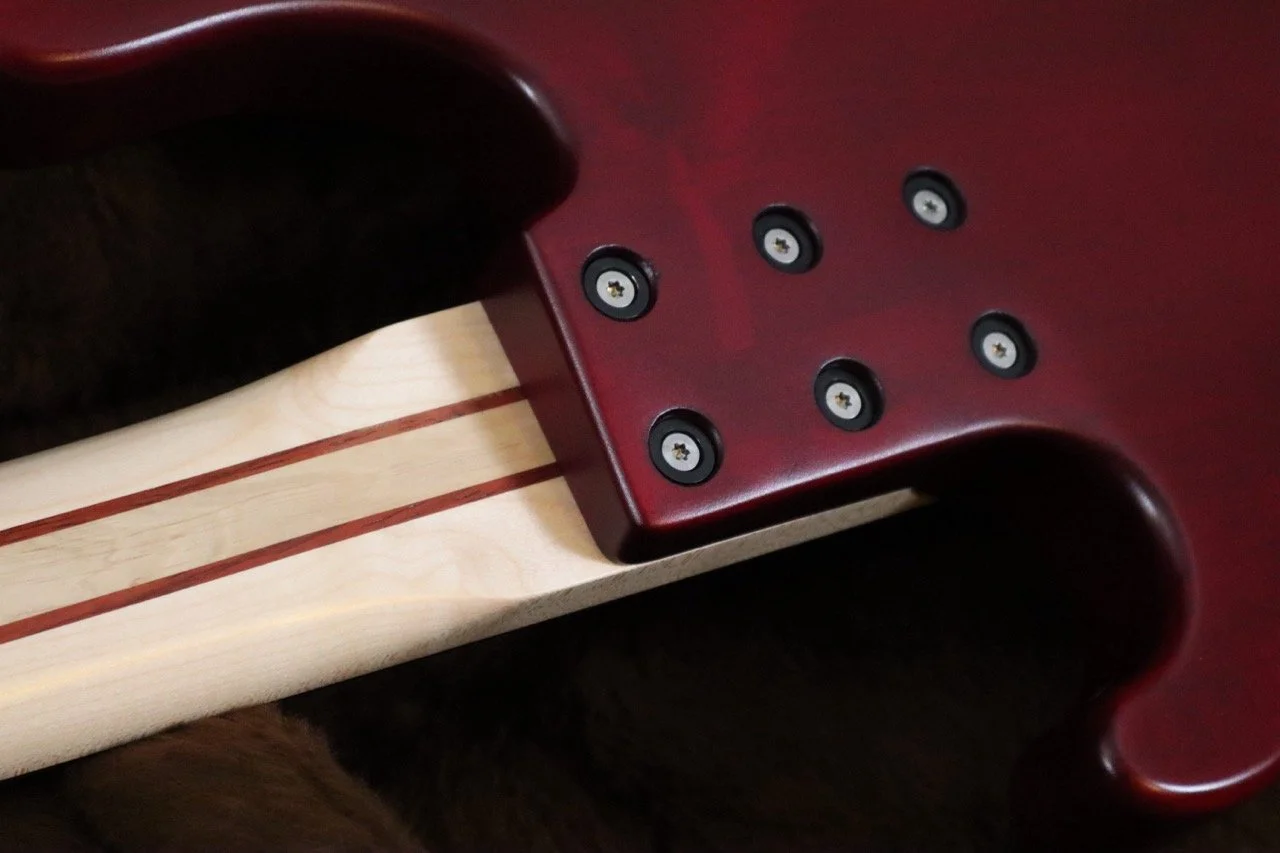
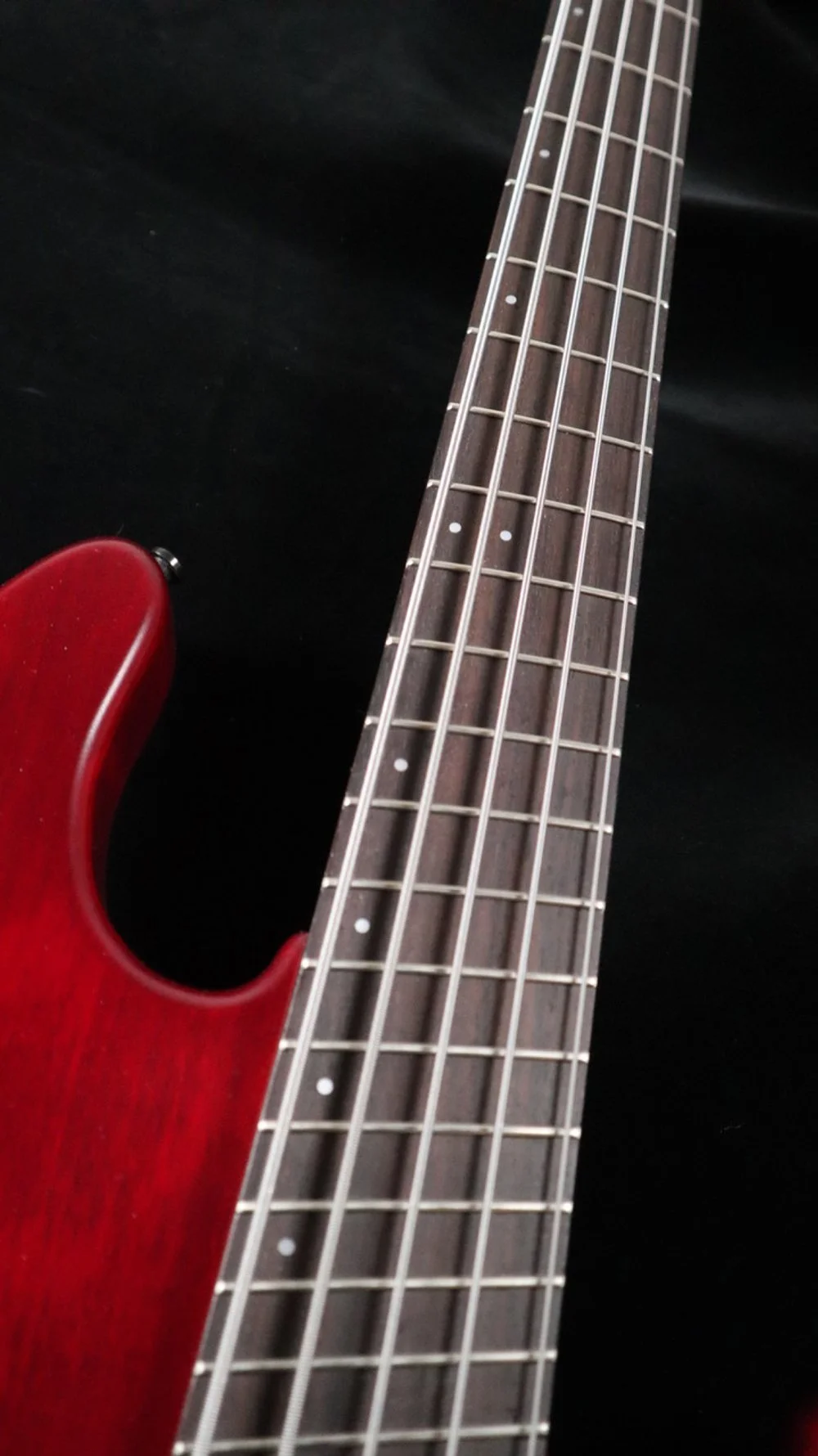
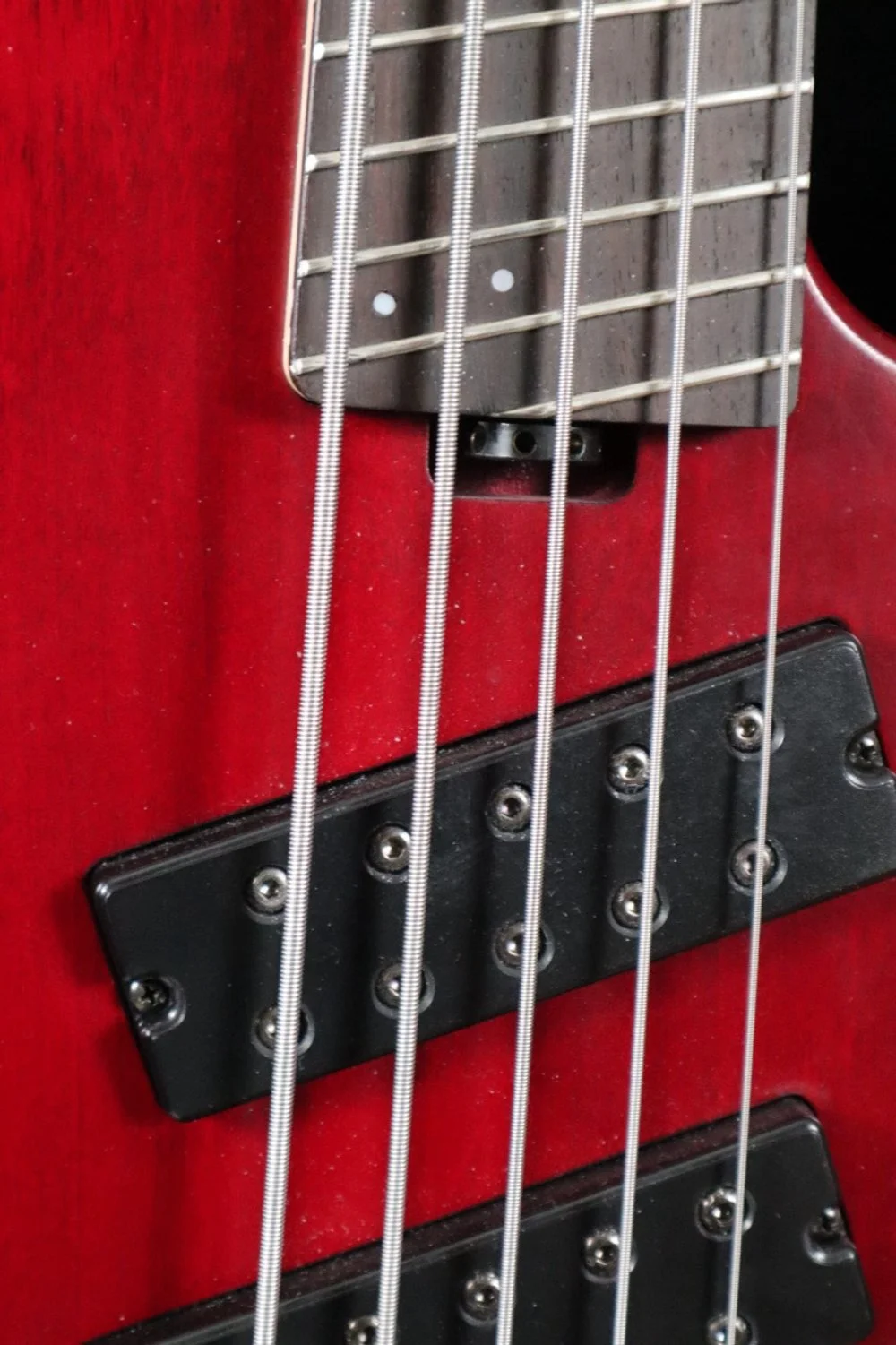
The Inlaw body, neck, and headstock were completely redesigned to accommodate the fanned-fret layout. We chose a mahogany body with a matte cherry finish, paired with a multi-strip maple–mahogany–hornbeam neck. For added strength and clarity, the neck features two carbon rods on either side of a two-way truss rod. The customer requested a rosewood fingerboard fitted with Dunlop 6230 frets. The neck is bolted to the body with six screws.
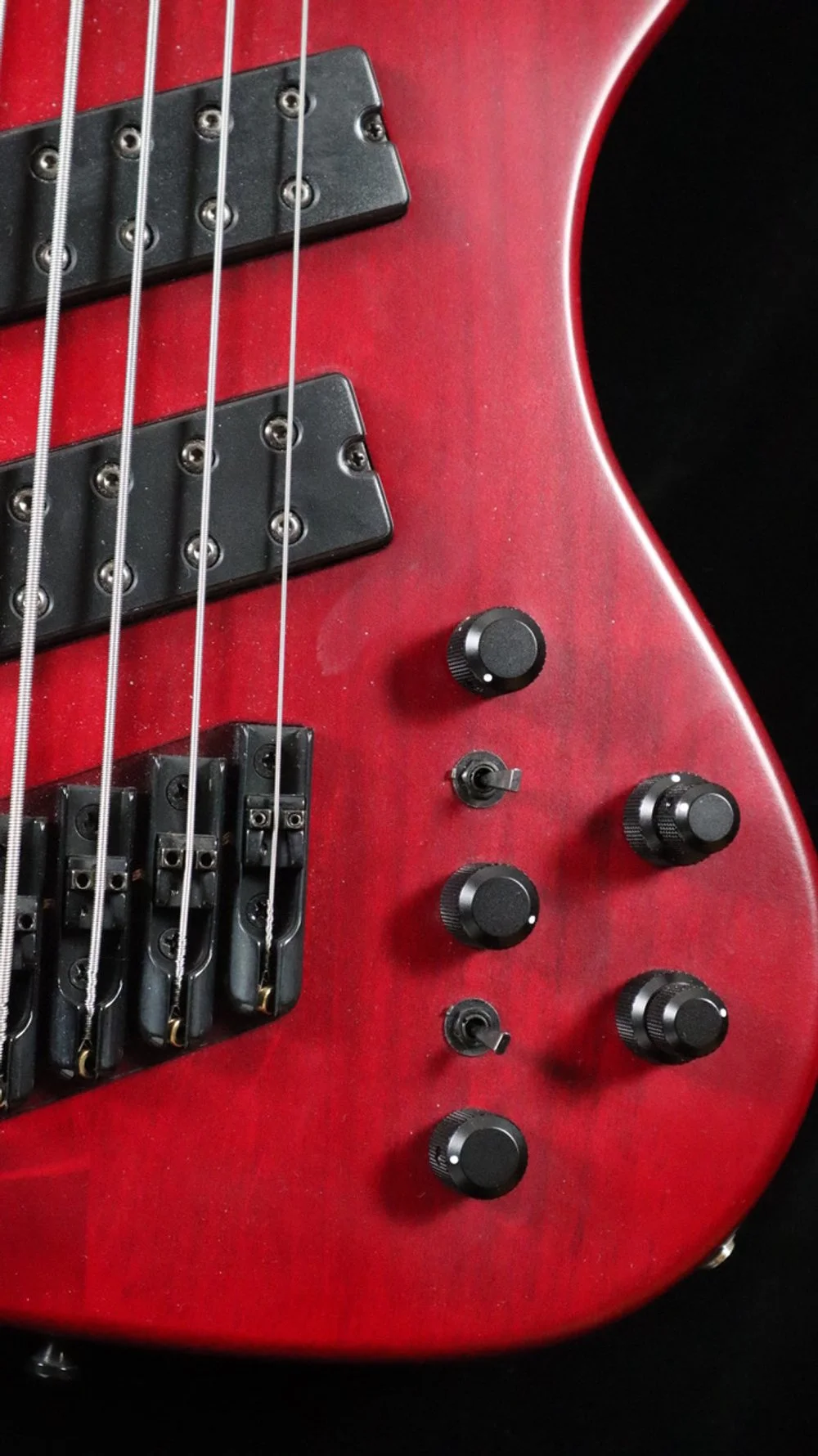
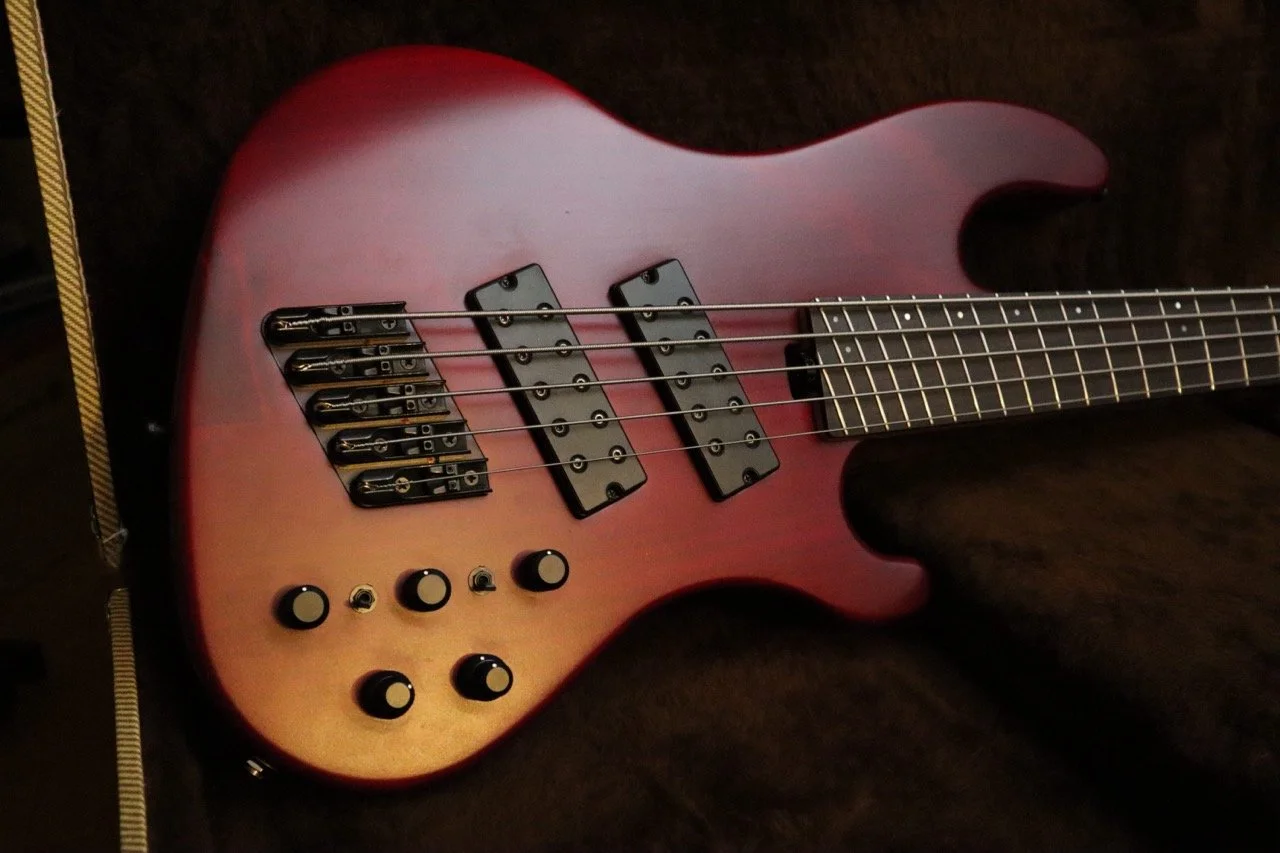
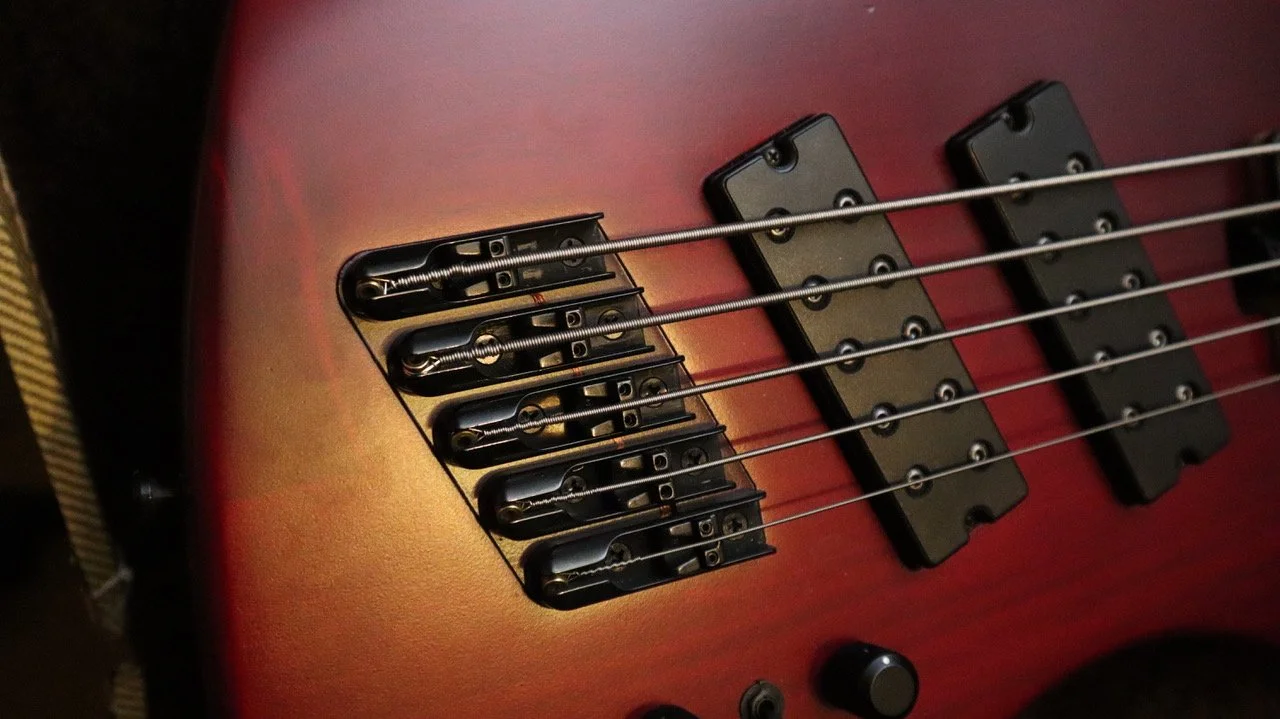
Because each string has its own scale length, we used individual string riders for the bridge.
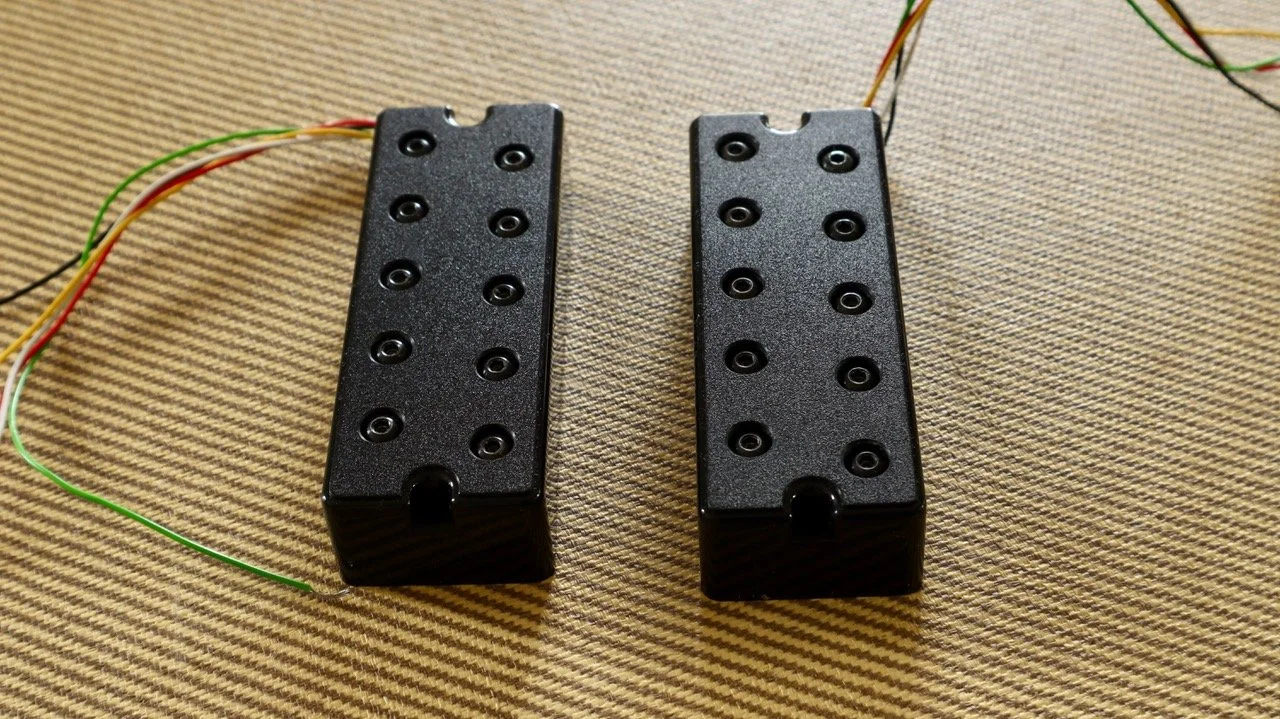
Several design iterations were needed to determine the correct pickup size and placement. We then convinced our pickup maker to build a custom set of slim multicoil W-buckers, with the pole pieces angled at 20 degrees. Each pickup contains ten coils, housed in EMG-style soapbar covers to accommodate the design.
For maximum tonal flexibility, I recommended the EAST Uni-Pre 5K electronics.